
Reviving Traditional Farming: Can Sri Lanka’s Ancient Wisdom Feed Our Future?
August 31, 2025
Admin
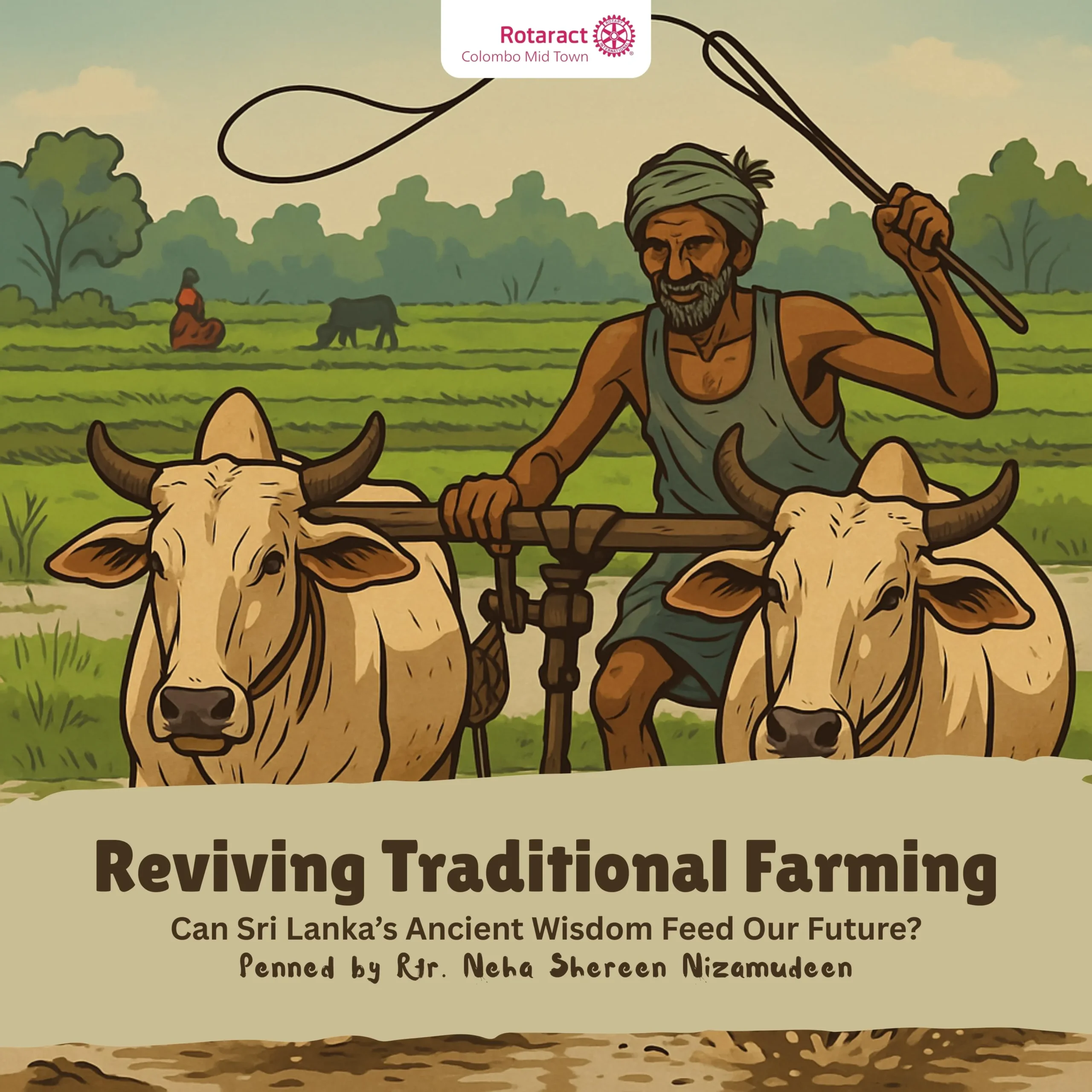
Have you ever stood by a paddy field at sunset, feeling the cool breeze, hearing the distant splash of water, and wondered how did our ancestors do it? How did they feed entire villages without chemicals, tractors, or machines that beep and buzz?
In the heart of Sri Lanka, long before modern fertilizers and genetically modified crops, there existed a system of farming that was not just about growing food it was about living in harmony with the land. But somewhere along the way, we replaced that balance with shortcuts. And now, as we face global food crises, climate change, and rising costs, the question echoes louder than ever: Is it time to look back to move forward?
What Did Our Ancestors Know That We’ve Forgotten?
Let’s travel back a few centuries. Our ancestors weren’t scientists in lab coats, but weren’t they scientists in their own right? They studied the skies, the soil, the seasons. They knew when the rains would come, which plants could survive a drought, and how to keep the soil fertile without poisoning the earth.
Ever heard of the tank cascade system? It was a marvel of ancient engineering hundreds of reservoirs (wewas), designed to store and purify water as it flowed from one to the next. These tanks didn’t just irrigate the land. They replenished groundwater, supported biodiversity, and protected communities during droughts.
Today, most of them lie neglected, buried under weeds and concrete. Isn’t it ironic? We scramble for imported water pumps and irrigation systems when our forefathers already had a smarter, sustainable solution.
What Happened to Our Traditional Crops?
Remember kurakkan, mung, ulundu, and suwandel rice? These were the superheroes of ancient farming resilient, nutritious, and adapted to Sri Lanka’s climate. They didn’t need chemical fertilizers or constant watering. And they nourished generations.
But now, the shelves in most stores are packed with imported rice and vegetables, while our own farmers struggle to sell their harvest. Why? Because hybrid seeds and mass production became the new norm. Because marketing made us believe that foreign is better.
Isn’t it time we asked what’s really better for our health, our farmers, and our future?
Pests, Fertilizers, and the Illusion of Control
Today, the average farmer uses a cocktail of chemical pesticides and fertilizers. It works for a while… until it doesn’t. The soil gets tired. The pests grow stronger. And the cycle becomes more expensive and more dangerous.
Our ancestors had a different approach. They used natural repellents like neem, pepper, ash, and certain leaves. They planted crops strategically to protect each other (a practice called intercropping). They rotated crops to give the soil time to heal.
Can you imagine the power of blending those time-tested methods with today’s scientific research? What if, instead of relying on chemicals, we taught farmers how to create their own organic compost or use plant-based pesticides?
The Future is Ancient (and Smart!)
This isn’t about going backward. It’s about taking the wisdom of the past and using it wisely in the present. Imagine a future where drones monitor crops, but the seeds in the soil are traditional Sri Lankan varieties. Imagine solar-powered irrigation for age-old paddy fields.
Imagine schools teaching not just coding and math but also how to compost, grow vegetables, and respect the earth. Wouldn’t that be a future worth fighting for?
What Can We Do Today?
So here’s the real question: What can we do?
· If you’re a student, can you research and promote local farming practices in your studies?
· If you’re a consumer, can you choose products from organic, local farms even if they cost a few rupees more?
· If you’re a policymaker, can you support subsidies for traditional farming methods instead of chemical-based solutions?
Because the truth is, agriculture isn’t just about food. It’s about identity. It’s about culture. It’s about our connection to the earth that raised us.
A Final Thought
When did we forget that farming is not just a profession, it’s a relationship between people and nature? When did we stop believing that our ancestors’ ways had value?
Sri Lanka doesn’t need to copy the rest of the world to succeed in agriculture. We only need to remember who we are. And in doing so, we might just feed not only our bodies, but also our future !