
Knives – A masked Weapon
September 18, 2025
Admin
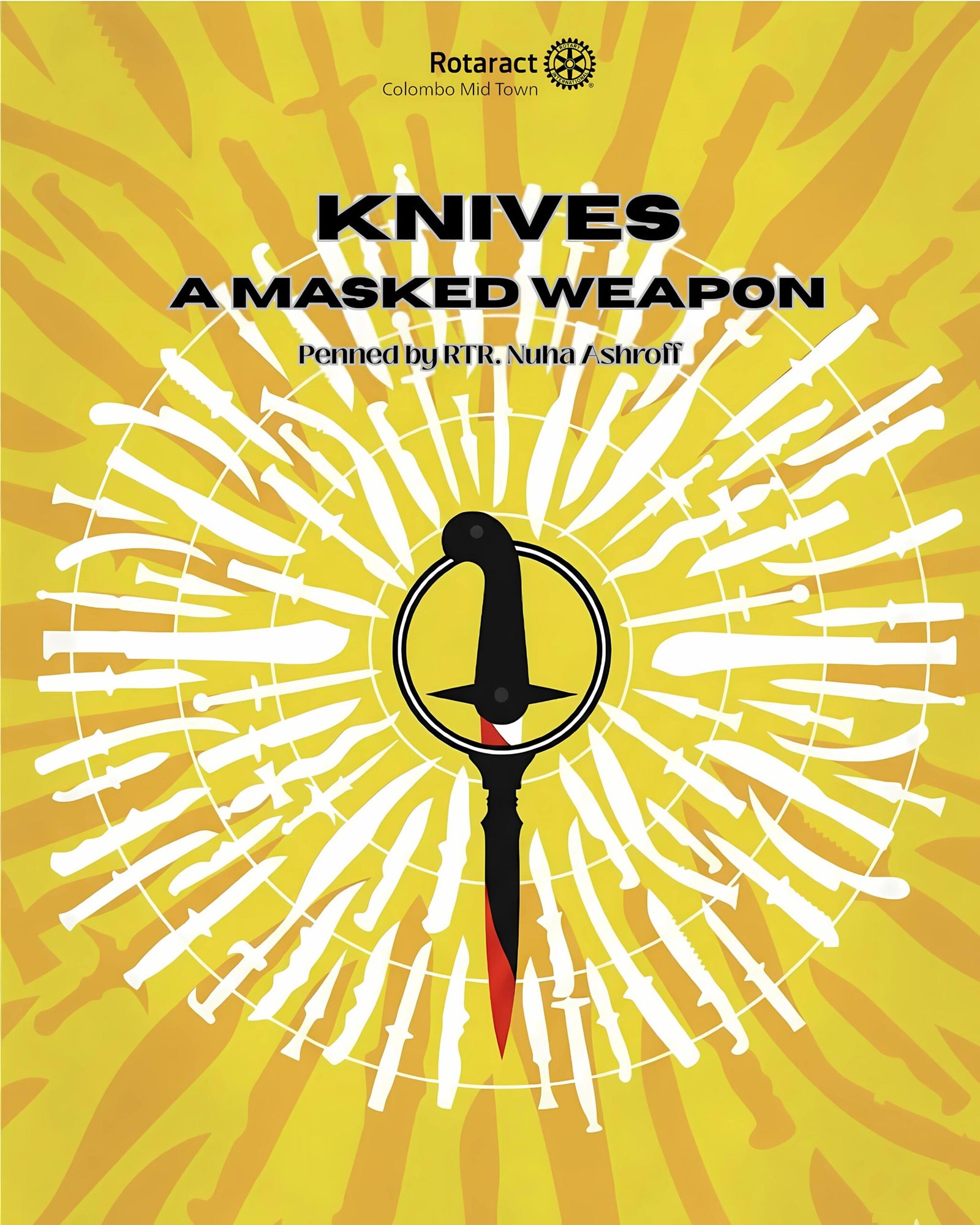
Since ancient times, man had one desire: to conquer the world, and to rule over it. To achieve this, he created instruments, established laws, and set rules to find his path to dominance. Among these achievements, one of the major stepping stones was the Stone Age era, with its stone tools. The first tool that man ever created was the “slate”.
That slate was used to chop trees, cut wood, hunt, and carve — a powerful instrument of survival. Over time, it was given a handle, tied with rope, and eventually transformed into a compact form of defense equipment, carried on the person, resembling a modern-day knife or dagger.
I have always been obsessed with knives. They captivated me as a child and continue to captivate me today. What makes knives so enthralling is not merely their function, but their potential. A knife, confined to a kitchen, cuts vegetables or peels fruits. Yet the gap between what it does and what it could do is immense. That potential is why it is feared.
As a child, I did not understand Tamil, and at my cousin’s house, I became fascinated with two words: kick and knife. This fascination was not casual; it was controlled and deep. Over time, I realized why. I am like a knife. People often judge me not for who I am, but for my potential. Some seek to dominate me to feel powerful; others fear that I could rise at any moment. This duality mirrors the knife itself: useful, yet inherently capable of more than its assigned purpose.
Knives are feared for their unpredictability, not for their immediate function. We adapt by creating knife holders, covers, and finger guards to safely engage with their power. Similarly, we encounter situations and people whose potential intimidates us. Humanity’s greatest strength is resilience and adaptation. When fear exists, we equip ourselves to work with it rather than combat it. The truly powerful do not fear others’ strength. They understand it, create strategies, and operate with intention. Strength lies in comprehension, strategy, and purposeful action, not dominance.
The knife also represents identity and unyielding potential. Forged through cycles of refinement, it becomes sharp yet controlled, dangerous yet purposeful. Life operates similarly. Fear exists when unpredictability has not been understood. By equipping ourselves with knowledge, skill, and preparation, we turn potential intimidation into a complementary force, a means to progress rather than an obstacle.
In conclusion, what distinguishes humanity is our ability to engage with power, embrace potential, and transform fear into mastery. Knives remind us that strength, when respected and understood, becomes an instrument of growth. By approaching life with strategy, preparation, and purpose, we turn uncertainty into opportunity. This is the essence of progress and the hallmark of human achievement.
By Rtr. Nuha Ashroff