
Are We Actually Free, or Just More Digitally Controlled?
April 30, 2026
Admin
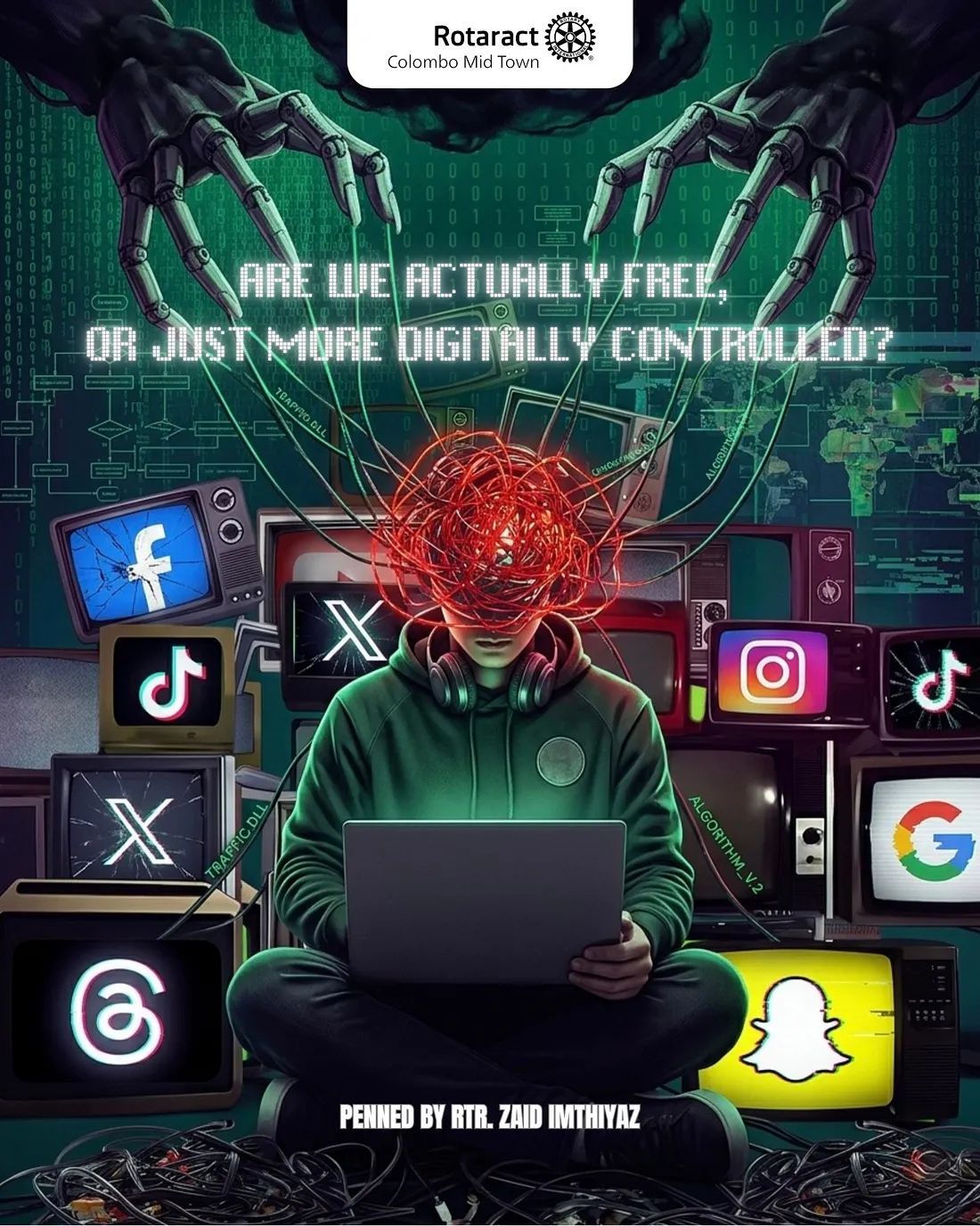
By Rtr. Zaid Imthiya
Every generation believes it has reached a new level of freedom, and in many ways, ours truly has. We can communicate instantly, access endless information, and express ourselves without traditional barriers. Life feels open and unrestricted. But beneath that surface, a more complex reality exists. The systems we rely on every day are not just tools, they are environments that quietly shape how we think, choose, and behave.
Modern control does not feel like control because it is built on convenience. Technology anticipates what we want, whether it is a video, a product, or a piece of news. This is powered by constant data collection. Every click and interaction helps build a detailed picture of who we are, allowing platforms to predict and influence what we are likely to do next. While this is often called personalization, it also means that much of what we see is filtered. Our digital world is not entirely self-directed, it is curated.
Over time, this creates a subtle effect. We are more likely to see content that aligns with our existing beliefs and interests, while other perspectives appear less often. Nothing is being actively hidden, but not everything is equally visible. This shapes our understanding of the world without us fully noticing it. The result is a sense of freedom that exists within invisible boundaries.
Social media highlights this balance between empowerment and influence. It gives people a voice and the ability to connect globally, which is a real form of freedom. At the same time, these platforms are designed to keep users engaged, not necessarily informed. The content we see is selected based on what will hold our attention, meaning our choices are gently guided rather than completely independent.
There is also the question of surveillance. Governments and institutions now have the ability to monitor behavior on a large scale. Even when this is done for security reasons, the awareness of being watched can change how people act. Individuals may hesitate before expressing certain opinions or exploring certain topics. This kind of self-censorship does not come from direct restriction, but from the feeling of being observed.
At the same time, much of this system exists because people participate in it willingly. We share personal information in exchange for convenience and connection. Over time, this has shifted how we view privacy. What was once considered essential now feels optional, and constant visibility has become normal.
This does not mean we are no longer free. People still make choices, express ideas, and shape their lives in meaningful ways. Digital technology has created opportunities and amplified voices across the world. But that freedom operates within systems that are designed to observe, learn, and influence.
In the end, the issue is not whether we are completely free or completely controlled. It is that both exist at the same time. We have more freedom than ever before, but it is shaped by digital environments that quietly guide our decisions. The most important thing is awareness, because real freedom is not just about having choices, but understanding how those choices are being shaped.